


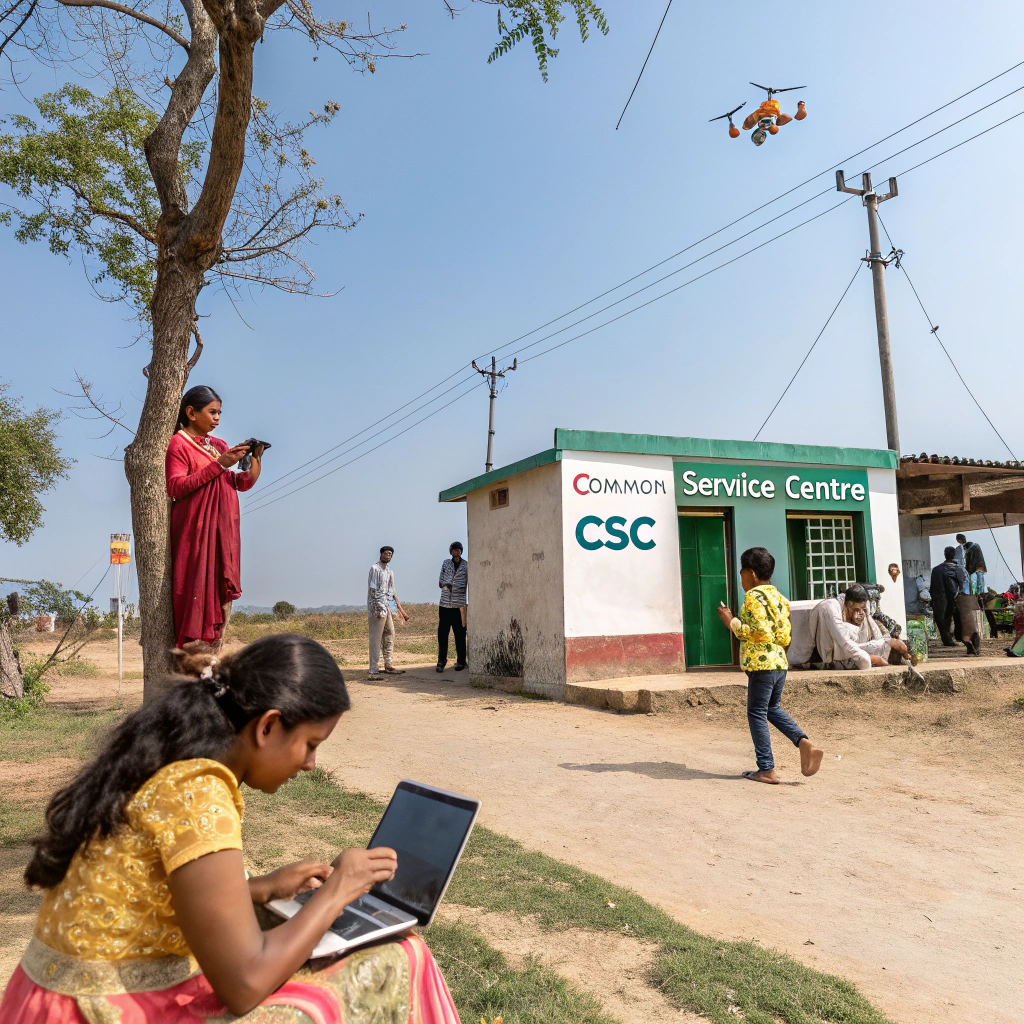
Digital India 2025: How Technology Is Reshaping Rural Communities
India, a country with over 65% of its population living in rural areas, is undergoing a digital revolution that is touching even its most remote corners. As we approach 2025, the vision of a “Digital India”, a government-led initiative launched in 2015, is becoming a powerful reality for millions of rural Indians. What started as an ambitious project to empower the nation with digital infrastructure has evolved into a social and economic movement. From telemedicine and online education to smart agriculture and digital banking, technology is reshaping the lives of rural communities in ways once thought impossible.
This article explores the transformative journey of rural India under the Digital India campaign, focusing on key sectors like education, healthcare, agriculture, and governance. By 2025, the digital divide between rural and urban India is narrowing at a rapid pace, and this evolution is not just about connectivity or gaming with the roll x betting game; it’s about opportunity, empowerment, and inclusion.
The Digital Infrastructure Backbone: Laying the Foundation
At the heart of Digital India lies the ambition to provide every Indian with access to the internet, digital services, and government resources. To achieve this, the government has invested heavily in laying fiber optic cables under the BharatNet program, aiming to connect over 250,000 Gram Panchayats (village-level administrations) with high-speed internet. As of 2025, more than 200,000 villages have already been brought online, many of them for the very first time.
This foundational infrastructure has enabled rural households to gain access to smartphones, digital literacy, and essential services. With the penetration of 4G and emerging 5G technology, internet access is no longer a luxury but a basic utility. Moreover, public Wi-Fi hotspots at Common Service Centres (CSCs) have made internet access affordable and community-centric. Villagers can now access services such as birth registration, land record verification, pension applications, and digital payments, often with the assistance of local entrepreneurs known as Village Level Entrepreneurs (VLEs). This infrastructural push has opened the floodgates for digital inclusion and catalyzed innovation in areas that were previously underserved.
Smart Agriculture: Growing More with Less
Agriculture is the lifeblood of rural India, employing nearly half the population. Yet, for decades, farmers have faced unpredictable weather, poor market access, and limited access to real-time information. By 2025, digital tools will have begun to reshape the face of Indian agriculture. Apps and platforms developed by government and private entities now provide farmers with instant access to weather forecasts, pest control techniques, crop advisories, and market prices.
Portals like eNAM (Electronic National Agriculture Market) allow farmers to sell their produce directly in digital marketplaces, removing middlemen and ensuring fair prices. Startups are increasingly providing AI-driven solutions such as soil testing through mobile cameras, satellite monitoring of crop health, and drone-based irrigation. Some villages have even adopted IoT (Internet of Things) sensors to manage water usage and automate farming processes. These innovations reduce input costs, increase productivity, and make farming more sustainable.
Digital financial services like Aadhaar-enabled bank accounts and mobile wallets are helping farmers receive subsidies, insurance, and credit directly into their accounts. Crop insurance schemes are now digitized, enabling faster claim settlements in the event of crop failure or natural disasters. Farmer Producer Organizations (FPOs) are also leveraging digital tools to build networks, access training, and negotiate better terms with buyers and suppliers. The result is an empowered farming community that is not only better informed but also more resilient.
Empowering Governance and Local Economies
Perhaps one of the most underrated aspects of the Digital India campaign is how it has empowered grassroots governance and entrepreneurship. Gram Panchayats, once bogged down by red tape and inefficiency, are now digitizing their processes. Birth and death certificates, property records, welfare schemes, and public grievance redressal are now accessible through online platforms. The rise of CSCs has created employment opportunities, turning digitally trained youth into VLEs who manage and operate these centers. These entrepreneurs play a key role in delivering government and financial services to their communities, often becoming local change-makers.
Digital India has also opened the doors for women’s empowerment. Women are increasingly participating in digital literacy programs, running micro-enterprises online, and accessing financial independence through digital banking. Skill development portals like PMGDISHA (Pradhan Mantri Gramin Digital Saksharta Abhiyan) are helping thousands of rural Indians become digitally literate and job-ready. The gig economy, too, is making inroads into rural India. Freelancers, artisans, and small business owners are using platforms like GeM (Government e-Marketplace), WhatsApp Business, and social media to sell products and services both locally and globally.
Finally, digital governance ensures greater transparency. Initiatives like Direct Benefit Transfer (DBT) and the use of Aadhaar have curbed corruption and ensured that subsidies and welfare benefits reach the intended recipients efficiently and securely.
Conclusion
The Digital India initiative has proven that technology, when thoughtfully implemented, can be a powerful tool for social and economic justice. Rural communities that were once digitally dark are now bursting with the light of information, opportunity, and empowerment. Farmers are becoming agri-entrepreneurs, schoolchildren are learning from global experts, patients are consulting doctors across cities, and women are running digital businesses from their homes.
Visit Bharatinformation.org