


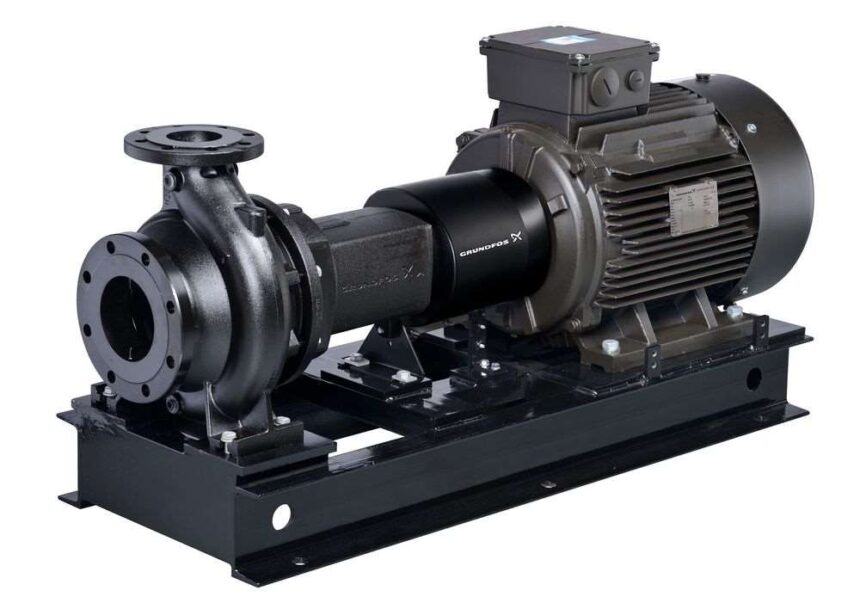
If you’ve ever wrestled with moving water, light oils, or other thin fluids, you know the drill: finding a pump that’s efficient, affordable, and won’t give you headaches. That’s where the end suction centrifugal pump comes in—a no-nonsense workhorse that’s quietly dominated low-viscosity jobs for decades. We’ve installed and fixed hundreds of these pumps for factories, fire systems, and water treatment setups, and we’ve seen firsthand why their single-stage design beats multistage pumps in most cases.
What Is an End Suction Centrifugal Pump?
An end suction centrifugal pump is a dynamic pump that uses one impeller (that’s the “single-stage” part) to move low-viscosity fluids like water or light oils. The “end suction” refers to its design: fluid enters through the center of the impeller (the “eye”) and exits axially, with the suction inlet sitting at one end of the casing.
Unlike multistage pumps—which stack multiple impellers to crank up pressure—this pump relies on a single impeller to get the job done. It’s the minimalist of centrifugal pumps: simple, tough, and built for efficiency.
Components of end suction centrifugal pump
Impeller: The pump’s heart; a rotating disc with curved blades that throws fluid outward.
Volute Casing: A spiral housing that turns the impeller’s speed into pressure.
Suction Inlet: Located at one end and lined up with the impeller eye so that fluid can flow directly in.
Shaft and Bearings: These parts keep the impeller spinning smoothly.
Single-Stage vs. Multistage Pumps: Why End Suction Wins for Thin Fluids
Let’s compare the end suction centrifugal pump to multistage pumps to see why it’s a good choice. Both types of pumps are centrifugal, but they are made for different jobs.
Multistage Pumps: High Pressure and High Complexity
Multistage pumps have two or more impellers stacked on top of each other. Each impeller adds pressure, which makes them great for jobs that need a lot of power, like pumping water 500 feet up a hill or feeding boiler systems. But here’s the catch: they’re hard to use, expensive, and not good for thin fluids.
End Suction Centrifugal Pumps: Easy to Use, Work Well, and Cheap
The single-stage design of the end suction centrifugal pump is a great example of “keep it simple.” It delivers:
Better Efficiency: There are fewer moving parts, so less energy is wasted. One impeller keeps stacked stages from rubbing against each other.
Less Money Up Front: You don’t need as many impellers or fancy casings, which saves you 30–50% compared to multistage pumps.
Easier to take care of: You only have to check or replace one impeller. More work done in less time.
Small Size: It can fit in small spaces, like mechanical rooms or HVAC units on the roof.
Types of End Suction Centrifugal Pumps
Not every end-suction centrifugal pump is created equal. ViRheos stands as a trusted brand that truly excels in customizing pump designs to meet specific industrial needs, and they draw on their engineering expertise to deliver tailored solutions that make a real difference.
Horizontal End Suction Pump
The most common type has the motor and pump lined up horizontally. It’s flexible, easy to maintain, and works with most industrial setups. We often suggest the horizontal end suction centrifugal pump for moving water, circulating air in HVAC systems, or adding small amounts of chemicals.
End Suction Pump with Close Coupling
In this case, the impeller connects directly to the motor shaft (no coupling). No problems with alignment and a smaller footprint make it perfect for small spaces like commercial kitchens or lab water systems.
Base Mounted End Suction Pump
A horizontal pump that is mounted on the same baseplate as the motor. Stable, resistant to vibration, and great for tough jobs like factory process water.
End Suction Fire Pump
A specialized model certified for fire protection (NFPA 20 compliant). Built to deliver high flow at moderate pressure for sprinklers or hydrants. Our end suction fire pump models are tested to run 24/7 during emergencies—we’ve seen them pass the ultimate test: actual fires.
Suction Pump for Sewage
Some end suction centrifugal pumps can handle light sewage (low solids), even though this isn’t common. They have open impellers that keep them from getting clogged, which makes them perfect for municipal lift stations or septic systems.
Application of End Suction Centrifugal Pumps
Fire Protection (End Suction Fire Pump)
Fire pumps have to move a lot of water quickly. An end suction fire pump perfectly balances flow and pressure, giving you 500 to 5,000 GPM at 50 to 150 PSI. We’ve put these in schools, hospitals, and warehouses, and they’ve always worked well.
HVAC & Chilled Water Circulation
Commercial buildings use horizontal end suction centrifugal pumps to move water that is either cold or hot. They are quiet, work well, and are popular in buildings that are LEED-certified.
Industrial Process Water
These pumps are used in factories to cool, rinse, and move materials. A close coupled end suction pump might move coolant through a CNC machine, and a base mounted end suction pump might feed a plating bath.
Municipal Water Supply
End suction centrifugal pumps are used in small towns and rural areas to move water from reservoirs to treatment plants. They are great for places that are hard to get to because they don’t need a lot of care.
Light Sewage Handling (Suction Pump for Sewage)
For wastewater with minimal solids (<2%), a modified end suction centrifugal pump (with an open impeller) works wonders. Cheaper than a full sewage pump and easier to service.
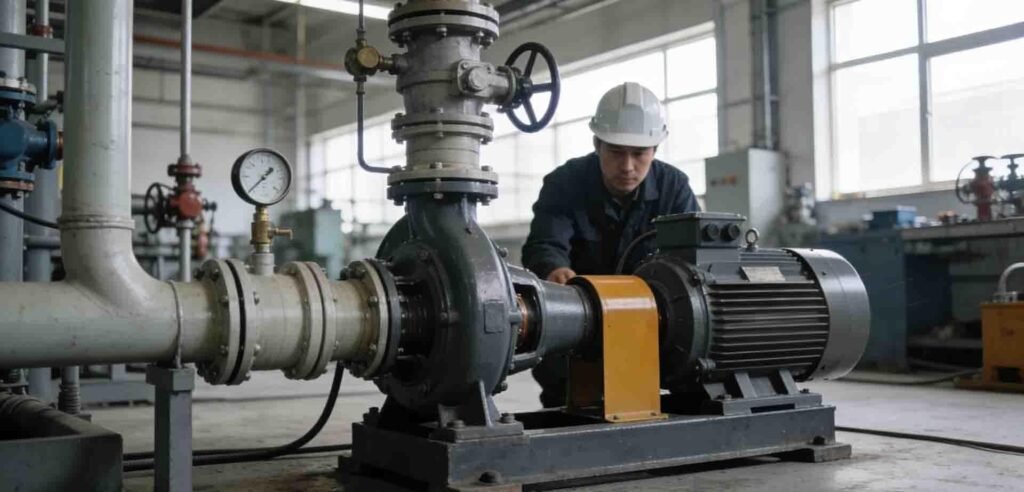
End Suction Centrifugal Pump vs. Double Suction Centrifugal Pump: How to choose right one
You might have heard of double suction centrifugal pumps—they’re similar but have fluid entering both sides of the impeller. So when does an end suction centrifugal pump win?
Low Viscosity Fluids: End suction pumps are more efficient for water, oils, and light chemicals.
Tight Spaces: Double suction pumps are bulkier—end suction fits where space is limited.
Budget-Friendly: End suction pumps cost 20–30% less upfront.
Double suction pumps shine for high-flow, moderate-pressure jobs (like power plant condensate), but for most thin-fluid tasks, the end suction centrifugal pump is the smarter choice.
Key points for selecting an end suction centrifugal pump
It’s not rocket science to pick a pump, but you do need to do some research.
1. Match Flow & Head Needs
Flow Rate (GPM): Figure out how much fluid you need to move. For example, a small cooling system needs 100 GPM.
Head Pressure (ft): Find out how far the fluid needs to go up (for example, 50 feet to a rooftop tank).
2. Consider Your Fluid
Viscosity: Use fluids with a low viscosity (less than 100 cP), like water, petrol and light oils.
Temperature: Make sure that the materials used to make the pump (cast iron, stainless steel) can handle the temperature of your fluid.
3. Choose the Right Type
Limited space? Choose a close coupled end suction pump.
If you need something that can handle heavy-duty operations, choose a base mounted end suction pump.
Fire safety?: Use only a certified end suction fire pump.
4. Regular maintenance
Check Seals Every Three Months: Look for leaks and change PTFE seals every two to three years.
Once a year, clean the impellers: Take out any dirt to keep them working well.
Listen for Cavitation: The gravelly noise means that air bubbles are hurting the impeller. Clear the inlet blockages as soon as possible.
Conclusion
The end suction centrifugal pump may not be the flashiest option, but that’s perfectly fine—it doesn’t need to be. In fact, it’s an excellent choice for moving low-viscosity fluids, whether you’re looking to protect against fire, cool factories, or handle a variety of other applications. Its efficiency, affordability, and simple single-stage design make it a reliable workhorse.At ViRheos, we’re here to support you every step of the way, offering a comprehensive range of solutions tailored to your unique requirements. Whether you need horizontal end suction centrifugal pumps for HVAC systems, reliable end suction fire pumps for safety-critical applications, or efficient suction pumps designed to handle light wastewater in sewage systems with ease—we’ve got you covered. Our team is dedicated to helping you find the perfect solution that meets your specific needs, ensuring you get the performance and reliability you deserve.
End Suction Centrifugal Pump FAQ
1.What is an end suction centrifugal pump, and why is it single-stage?
It’s a dynamic pump for low-viscosity fluids with just one impeller (the single-stage core). Fluid enters the impeller’s center and exits axially from one end of the casing.
2.Why is it better for low-viscosity fluid transfer?
Its simple single-impeller design means higher efficiency, 30-50% lower upfront costs than multistage pumps, easier maintenance, and a compact size—perfect for thin fluids.
3.What are its key core components?
Impeller (the pump’s heart), volute casing (converts speed to pressure), suction inlet (fluid entry), and shaft & bearings (smooth impeller rotation).
4.What types are there, and for which scenarios?
5 main types: horizontal (general industrial use), close coupled (tight spaces), base mounted (heavy-duty factory work), fire pump (NFPA 20 fire protection), sewage pump (low-solids wastewater).
5.How to choose between end suction and double suction pumps?
Choose end suction for low-viscosity fluids, tight spaces or cost savings; double suction works for high-flow, moderate-pressure tasks (e.g., power plant condensate).
6.What key specs matter for selection?
Prioritize matching flow rate (GPM) and head pressure (ft); also consider fluid viscosity (<100 cP) and temperature for material selection.
7.What fluids is it suitable for?
It’s designed for low-viscosity fluids (≤100 cP) like water, petrol, light industrial oils and mild light chemicals.
8.What’s the flow/pressure range of its fire pump model?
NFPA 20 certified end suction fire pumps deliver 500–5,000 GPM at 50–150 PSI for sprinklers and hydrants.
9.What regular maintenance does it need?
Check seals every 3 months (replace PTFE seals every 2-3 years); clean impellers annually; clear inlet clogs at the first sign of cavitation noise.
10.Can it handle sewage or wastewater?
Yes, for light wastewater with <2% solids (fitted with open impellers to prevent clogs); not for high-solids sewage.
References
- A Review of Design Analysis Methods for Horizontal End-Suction Centrifugal Pumps-This paper presents an analytical method for mechanical design review of horizontal end suction centrifugal pumps. An example is given for a hypothetical pump design with a review of calculation methods for determination of the unbalanced hydraulic forces.-Read more
End Suction Centrifugal Pump Operating in Turbine Mode for Microhydro Applications-This paper reviews research on end suction centrifugal pumps coupled with induction generators in turbine mode for microhydro applications, highlighting that pumps can operate as turbines without mechanical modifications but require higher flow rate and head than pumping ratings for best efficiency-Read more