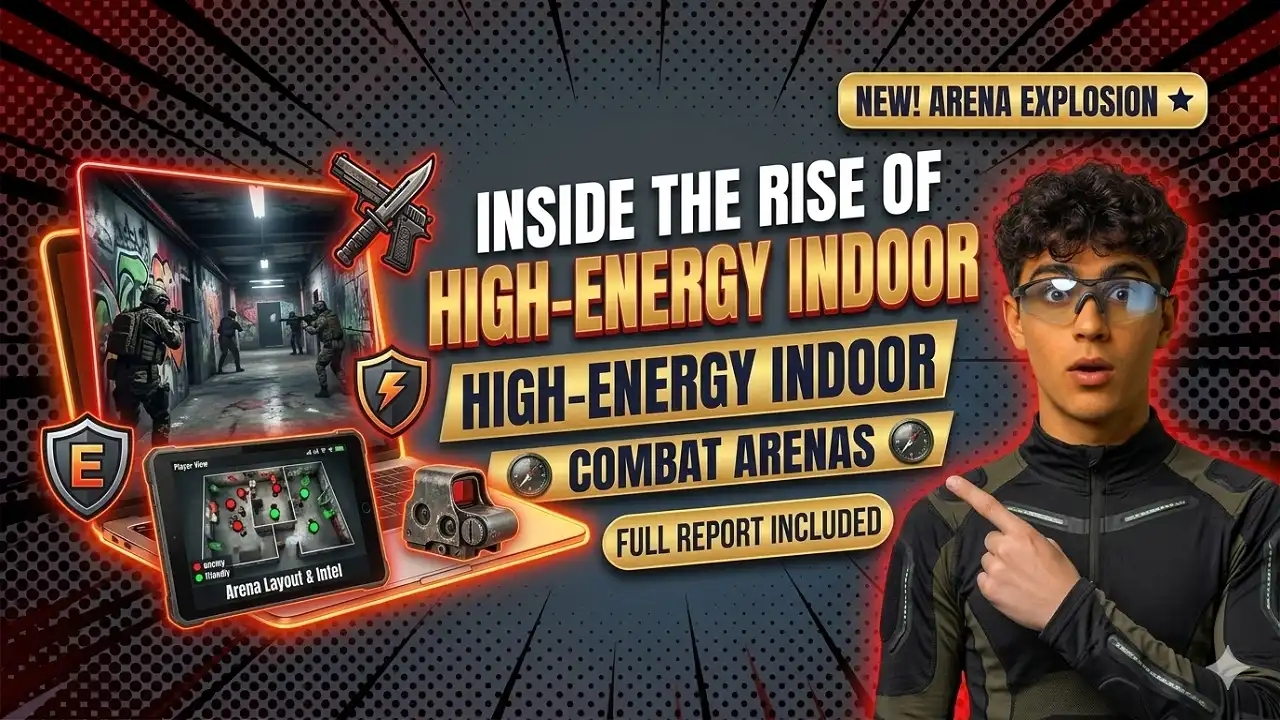
Video games have dominated entertainment for decades, but sitting on a couch only offers so much excitement before players start craving something more tangible. A shift is happening across the country as people look for ways to pull the action out of the television screen and into the real world. This desire for physical activity, mixed with the adrenaline of a shooter game, has sparked a wave of indoor combat facilities. These venues are completely transforming how friends and families compete by blending digital scoring systems with the kind of movement that leaves you breathless and laughing.
The Old Plastic Vests Are Gone
The classic birthday party memory of wandering around a dark maze with a heavy plastic vest is getting a major overhaul. Modern arenas are trading simple beams of light for physical projectiles that add a genuine tactile element to the experience. It isn’t just about one specific system anymore; you might encounter high-tech setups like Nexus Gel Blaster or even competitive foam dart arenas. These technologies bridge the gap by using physical ammo, like water-based gellets or soft foam, that you actually feel on impact, all while keeping track of the score.
This hybrid approach changes the game because players are not just hiding in corners waiting for a sensor to reset after a hit. The physical sensation adds a layer of urgency that forces participants to move faster and communicate better with their teammates. It turns the match into a genuine workout where quick reactions matter just as much as aiming skills. The stakes feel higher when you have to physically dodge incoming fire rather than just hoping a laser beam misses your chest sensor.
Strategy in the Real World
What makes these new venues so engaging is how they replicate the mechanics found in popular console shooters. Gone are the days of getting hit once and sitting on the bench. Modern games keep the energy high by using respawn zones and power-ups so you can jump right back into the action. This continuous style of play ensures that adrenaline stays high throughout the entire session since players are constantly scrambling for cover or coordinating a tactical push rather than standing around waiting for the next match to begin.
The intensity ramps up significantly when you realize that you cannot just camp in a corner waiting for a timer to reset because the opposing team is actively flanking your position and sending a stream of water-based rounds in your direction. You have to work with your squad to control the arena. It is fast, physical, and requires genuine teamwork to come out on top.
Anyone Can Jump In
It is easy to assume these high-energy zones are reserved for teenagers or fitness enthusiasts, but the barrier to entry is surprisingly low. Most facilities design their equipment and arenas to be accessible for children as young as six while still offering enough depth to challenge adults.
The equipment is light enough that you can just walk in and start playing without a steep learning curve. You do not need to spend weeks training or buying your own gear just to have a blast with your friends. This ease of access draws in everyone from office groups looking to blow off steam to families wanting a fun afternoon. Running around obstacles and tagging your buddies turns out to be hilarious fun, no matter how old you are.
Active gaming isn’t fading away anytime soon because people want more than just pixels on a screen. These arenas offer a rare mix of energy and competition that brings groups together in a way that movies or bowling simply cannot match. Whether for a big celebration or just a random Saturday, stepping into the arena delivers a rush that is hard to find anywhere else.