


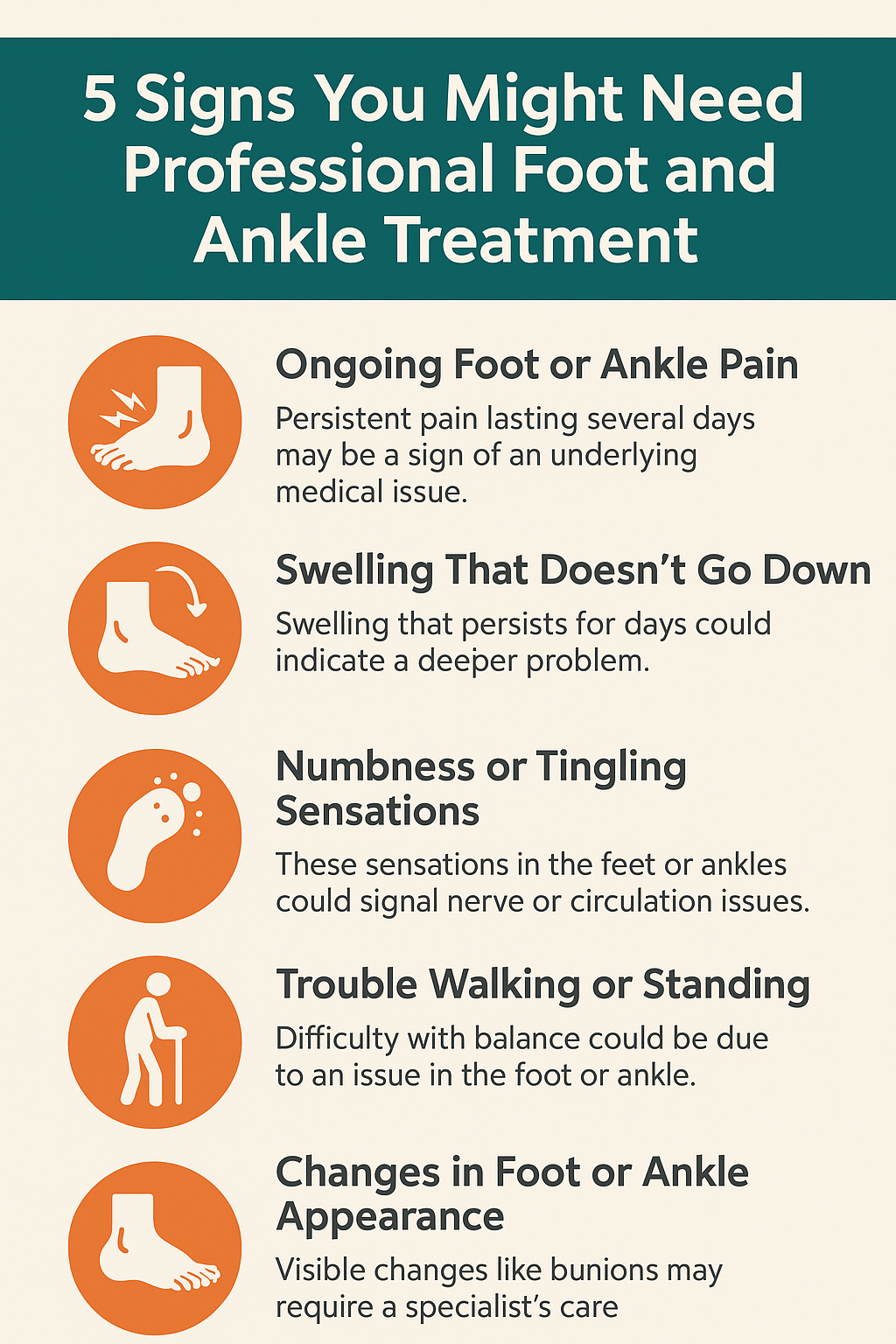
Our foot and ankle are often taken for granted, yet they play a vital role in our daily movement and overall health. Pain or discomfort in these areas can indicate that something more serious is occurring. When issues arise, seeking professional treatment might be necessary to ensure long-term mobility and well-being. Certain symptoms may indicate that it’s the right time to seek advice from a medical specialist.
1. Ongoing Foot or Ankle Pain
Persistent pain lasting several days may be a sign of an underlying medical issue that requires professional attention. A specialist can evaluate your condition and recommend the best foot and ankle treatment tailored to your specific needs. Ignoring persistent pain can lead to further complications. If the discomfort affects your ability to walk or stand, seeking professional care is essential to avoid worsening the problem. While occasional discomfort is normal, constant pain can indicate injuries or conditions like arthritis.
2. Swelling That Doesn’t Go Down
Swelling is often a sign of injury or overuse. However, if it doesn’t subside after a few days, it could indicate a deeper issue, such as a sprain or tendon inflammation. A specialist can evaluate the condition and suggest appropriate treatment to reduce the swelling. Effective treatment is important for managing swelling and preventing long-term damage. A professional’s guidance can help prevent more serious problems down the road.
3. Numbness or Tingling Sensations
If you experience numbness or tingling in your feet or ankles, it could indicate nerve compression or poor circulation. These sensations should not be ignored, as they can lead to more severe complications. A foot and ankle specialist can help diagnose the cause and recommend treatments to address the issue. Getting an accurate diagnosis and timely treatment can help stop nerve-related problems or other conditions from progressing. If left untreated, numbness can interfere with your daily life.
4. Trouble Walking or Standing
Struggling with balance, walking, or standing can indicate foot or ankle problems. Conditions like tendonitis, fractures, or deformities can make movement difficult. Seeking professional care can help restore mobility and reduce discomfort, allowing you to perform daily activities with ease. A professional’s evaluation can help determine the cause and suggest exercises or treatments to improve foot and ankle strength and stability.
5. Changes in Foot or Ankle Appearance
Visible changes in your feet, such as bunions, hammertoes, or other deformities, may indicate an underlying issue. These changes can cause pain or affect your mobility. Consulting a foot and ankle specialist early on can help prevent further complications and improve comfort. Consider these essential factors as you move forward:
- Changes in foot structure can worsen over time, leading to more severe pain
- A professional can suggest solutions to address deformities and prevent further damage
- Early intervention can prevent the need for surgery or other invasive treatments
Tips for Choosing the Best Specialist for Foot and Ankle Care
When it comes to finding the right foot and ankle specialist, it’s essential to look for someone with the expertise and experience to address your specific needs. Start by checking for certifications and ensuring the specialist is well-versed in diagnosing and treating a variety of foot and ankle conditions.
You can also look for professionals with a strong reputation for patient care and those who offer personalized treatment plans. Reading patient reviews and getting recommendations from trusted healthcare providers can guide you in the right direction. Make sure the specialist uses the latest diagnostic methods and offers a range of treatment options tailored to your condition.
Listening to the warning signs from your feet and ankles is vital for preserving proper mobility and overall health. Seeking professional foot and ankle treatment ensures that any issues are properly addressed and managed. Early intervention can prevent complications and promote better health in the long run.