



India is a land of diverse landscapes, each contributing uniquely to its cultural and ecological tapestry. To fully appreciate the beauty and complexity of this vast country, one must understand its Physiographic Division of India.
These divisions categorize the varied physical features of India, influencing everything from climate to agriculture and biodiversity. We share this information about the major Physiographic Division of India, their characteristics, and their impact on the environment and human activities.
Introduction
India’s geography is not just a backdrop; it plays a pivotal role in shaping the nation’s identity and lifestyle. The country’s Physiographic Division of India include the Northern Mountains, Northern Plains, Peninsular Plateau, Indian Desert, Coastal Plains, and Islands.
Each division exhibits distinct geological features, climate patterns, and ecosystems that contribute to India’s rich biodiversity. Understanding these divisions is essential for anyone looking to explore India’s natural beauty or study its environmental dynamics.
Major Physiographic Division of India

Northern Mountains
The Himalayas form the backbone of northern India, characterized by towering peaks and diverse ecosystems. This mountain range is not only home to some of the highest peaks in the world but also plays a crucial role in influencing the climate of the Indian subcontinent.
Basic Features:
- High peaks such as Mount Everest and Kanchenjunga
- Diverse flora and fauna
- Acts as a climatic barrier protecting northern India from cold winds
Northern Plains
The Indo-Gangetic Plain is one of the most fertile regions in India, formed by alluvial deposits from major river systems like the Ganges, Indus, and Brahmaputra. This area is known for its agricultural productivity.
Basic Features:
- Fertile alluvial soil ideal for agriculture
- Dense population centers
- Supports crops like rice, wheat, and sugarcane
Peninsular Plateau
The Deccan Plateau is marked by rugged terrain and rich mineral resources. This plateau features several hill ranges, including the Western and Eastern Ghats.
Basic Features:
- Composed mainly of ancient igneous and metamorphic rocks
- Rich in minerals like iron ore and bauxite
- Unique landforms such as block mountains and rift valleys
Indian Desert
The Thar Desert, located in western India, presents a stark contrast to the lush plains. Characterized by arid conditions, it hosts unique ecosystems adapted to extreme temperatures.
Basic Features:
- Sand dunes and sparse vegetation
- Extreme temperature variations
- Unique wildlife adapted to desert conditions
Coastal Plains
India’s coastal plains are divided into eastern and western regions. These areas are influenced by their proximity to the sea, which affects their climate and biodiversity.
Basic Features:
- Rich in marine biodiversity with ecosystems like mangroves and coral reefs
- Supports agriculture and fishing industries
- Major tourist destinations due to scenic beaches
Islands
India’s island territories include the Andaman and Nicobar Islands in the Bay of Bengal and Lakshadweep Islands in the Arabian Sea. These islands are known for their rich biodiversity.
Basic Features:
- Coral reefs supporting diverse marine life
- Strategic importance for national security
- Unique flora and fauna not found on the mainland
Summary Table of Physiographic Division of India
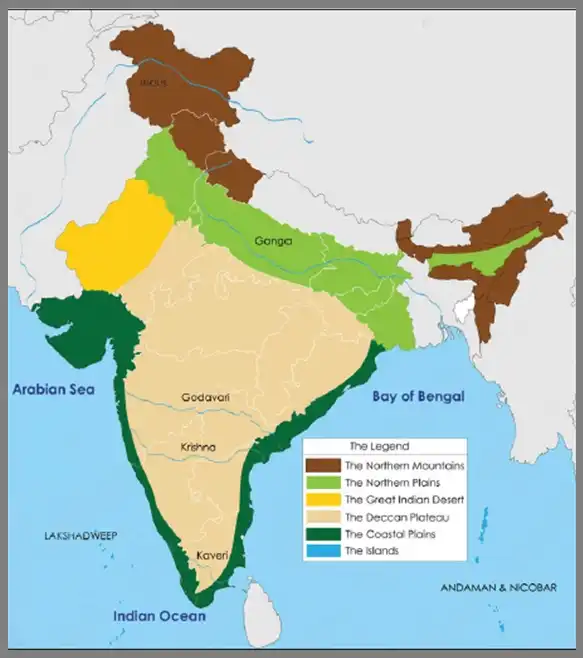
| Division | Basic Features |
| Northern Mountains | High peaks; diverse ecosystems |
| Northern Plains | Fertile Indo-Gangetic Plain; agriculture |
| Peninsular Plateau | Rugged terrain; mineral-rich; hill ranges |
| Indian Desert | Arid; unique ecosystem |
| Coastal Plains | Eastern & Western coastal regions; biodiversity |
| Islands | Andaman & Nicobar; Lakshadweep; marine life |
Influence on Climate
The Physiographic Division of India significantly influence its climate, resulting in a diverse range of weather patterns across the country.

Himalayas as a Climatic Barrier
The Himalayas act as a barrier against cold winds from Central Asia. This protective role leads to milder winters in northern India compared to regions at similar latitudes without such elevation.
Monsoon Dynamics
During the monsoon season, the Himalayas intercept southwest monsoon winds. This results in heavy rainfall on their windward side while creating a rain shadow effect on the leeward side, leading to drier conditions in regions like the Deccan Plateau.
Impact of Northern Plains
The Indo-Gangetic Plain experiences hot winds known as ‘loo,’ which can raise temperatures significantly during summer months. These winds contribute to extreme heat during pre-monsoon seasons.
Desert Climate Influence
The Thar Desert influences local weather patterns by increasing temperatures in adjacent regions through hot dry winds. This creates stark contrasts between arid desert conditions and more humid climates found elsewhere.
Coastal Influences
Coastal plains experience milder climates due to their proximity to the sea. The ocean moderates temperature extremes, leading to milder summers and winters compared to inland areas.

Agriculture in the Indo-Gangetic Plain
The Indo-Gangetic Plain is often referred to as India’s “breadbasket” due to its agricultural productivity. Several factors contribute to this success:
- Fertile Alluvial Soil: Rich in nutrients due to alluvial deposits from major rivers.
- Monsoon Rainfall: Annual monsoon rains replenish soil moisture essential for crop growth.
- Irrigation Systems: Extensive irrigation systems utilizing river water ensure crop yields even during dry periods.
- Crop Diversity: Farmers employ various agricultural practices that enhance productivity while conserving water.
Despite its advantages, agriculture in this region faces challenges such as climate change affecting rainfall patterns and crop yields.
Biodiversity Role of Himalayan Mountains
The Himalayan Mountains are recognized as one of the world’s biodiversity hotspots. They host numerous species that are vital for ecological stability:
- Biodiversity Hotspot: Home to around 3,160 rare plant species with many endemic varieties.
- Water Source: The glaciers feed major rivers crucial for millions living downstream.
- Climate Regulation: The mountains influence monsoon patterns essential for agriculture across northern India.
- Habitat for Endemic Species: Unique habitats support species like snow leopards and red pandas.
Conservation efforts are critical for preserving this rich biodiversity amid threats from climate change and human activities.
Coastal Ecosystems Impact

India’s coastal plains play a significant role in supporting rich ecosystems:
- Ecological Contributions: Coastal regions host mangroves, coral reefs, estuaries, providing habitats for various species.
- Economic Significance: Vital for fisheries that support local economies; tourism thrives due to natural beauty.
- Storm Protection: Coastal ecosystems act as natural barriers against storms and erosion.
However, these ecosystems face challenges from pollution, climate change, and urban development that threaten their health.
Finally
Physiographic Division of India offers valuable insights into its geography, culture, and natural beauty. Each division presents unique experiences—from trekking in the majestic Himalayas to exploring vibrant coastal ecosystems or traversing arid deserts. As we navigate these diverse landscapes, it becomes clear how interconnected our environment is with human activity.

Protecting these physiographic features is essential not only for preserving India’s ecological heritage but also for sustaining livelihoods dependent on these natural resources. By appreciating these divisions’ significance, we can foster a deeper connection with India’s rich heritage while advocating for responsible environmental stewardship.
For More University Education Update Visit Bharat Information