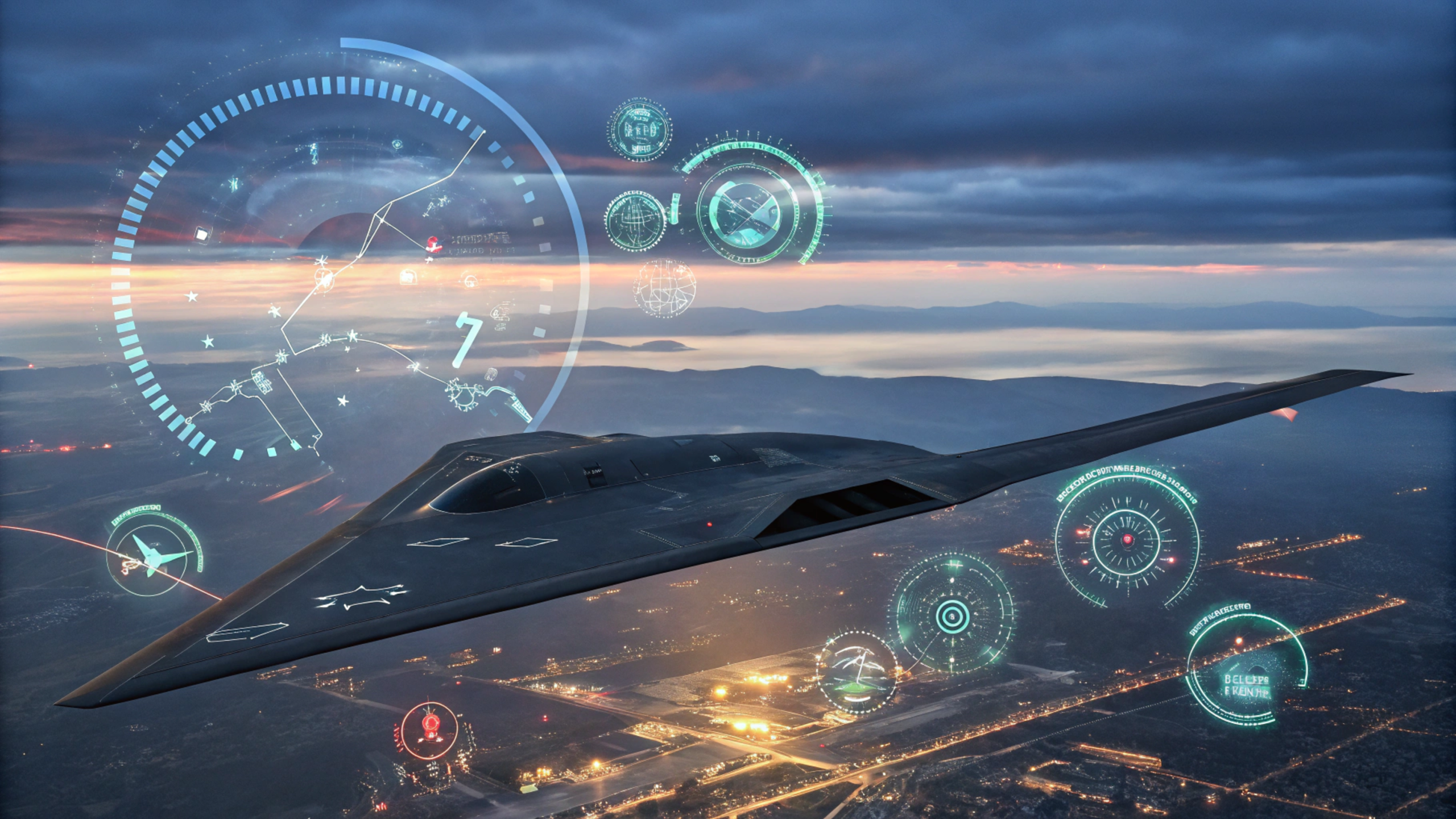
The rumble of engines above isn’t just announcing an aircraft’s presence – it’s heralding the future of military aviation! Did you know that the new B-21 Raider uses more than 50 breakthrough technologies that didn’t exist 10 years ago? I’m interested in the development of bomber technology from the wood-and-fabric biplanes of WWI into today’s invisibility-cloaking, computer-assisted stealth fortresses. The bomber world is undergoing its greatest change since the jet age, with science fiction technologies that seem to be the stuff of war making real-world appearances.
The History of Decades of Advancement of bomber technology
Bomber aircraft have been a defining element of modern warfare, and over the post-war decades, they have undergone a series of modifications that have adapted them to the new strategic requirements and technological opportunities every decade. From their early beginnings in World War I to stealthy, digital and precision-capable machines today, bombers are an accurate reflection of advances in both aviation and military doctrine.
Historical Development from WWI to WWII – bomber technology:
Aerial bombing first originated in World War I when aircraft were first used for reconnaissance purposes and adapted to dropping small bombs on enemy positions. These early bombers were slow, vulnerable and limited in payload, but they proved an idea – attacking strategic targets from the air.
In the case of World War II, bomber technology developed very fast. The B-17 Flying Fortress, Avro Lancaster, and Heinkel He 111 could fly longer, had defensive armaments, and carried huge bombloads. Strategic bombing attacks on cities and industrial centres became the dominant military tactic, illustrating both the destructive and psychological power of bomber aircraft.
Nuclear Delivery Systems and Developments of the Cold War
The Cold War changed the role of bombers, placing them in the center of nuclear deterrence plans. Modern bombers such as the B-52 Stratofortress and Soviet Tu-95 Bear were designed for intercontinental range, jet propulsion and aerial refueling, which enable them to carry nuclear weapons anywhere in the world. The bombers came to symbolise national power and fleets remained on constant alert as part of the balance of terror between the United States and Soviet Union.
Convert from Conventional to Smart Bombing Capabilities
During the mid-to-late 20th century, the shortcomings of carpet bombing had been shown during military conflicts. The Vietnam War especially showed the importance of being more accurate. This was the impetus behind the development of laser guided munitions and later GPS guided munitions. These advanced weapons were adapted to modern bombers like the B-1 Lancer and upgraded B-52s, allowing for precise strikes with minimal collateral damage and maximum mission effectiveness.
Digital Revolution and Implications on the Design and Operation of Bomers
The late 20th and early 21st centuries brought a digital revolution that changed the bomber aircraft. Subsequent avionics, information sharing and electronic warfare capabilities transformed bombers into integral nodes in a network-centric battle environment. Stealth technology was taken to the next level with the B-2 Spirit, an aircraft that can slip in undetected to heavily defended airspace by being virtually invisible to radar. Today’s bombers incorporate stealth, digital targeting, and long-range strike capabilities and have become essential instruments in both conventional and strategic operations.
Chronology of Major Technological Advancements in Bomber Aircraft.
1914-1918: The first bomber aircraft were brought in during World War I.
1939 – 1945: WWII heavy bombers carrying heavier payloads and with strategic missions
1950s-1960s: Cold War long-range jet-powered nuclear bombers with refueling systems.
Late 1970s: Precision-guided munitions and the warfare technology of “smart bombing” emerge.
2000s- Present: Stealth, digital integration, and next-generation platforms like the B-21 Raider dominate future warfare.
Stealth Systems and Radar Avoidance Systems
Modern bombers and fighter aircraft utilize stealth to the nth degree to survive in heavily defended airspace. Flying below radar, less heat signatures, and less visibility across a range of spectrums gives these aircraft a decisive edge in modern warfare. Over the past decades stealth has become a major part of bomber design and an essential element in air supremacy.
Advanced Composite Materials and Radar Absorbing Coating
One of the most important developments in stealth is the use of radar-absorbent materials (RAM), and advanced composites, which absorb radar signals. These special coatings and structural materials are designed to absorb and dissipate radar waves instead of reflecting them back to the enemy’s system. Stealth bombers such as the B-2 Spirit and the forthcoming B-21 Raider are hard to track by radar, even when flying through fields of radar defenses designed to close them in.
Optimal Shape for Low Radar Cross Section
Aerodynamic shape is just as important as materials Aircraft designers use angular surfaces, blended wing bodies and curved edges to reflect radar waves away from detection systems. This lowers the aircraft’s radar cross section (RCS) enough to render it much smaller-or even invisible-on enemy radars. Internal weapons bays, flush-mounted sensors, and covert air intakes also help keep things hidden while not compromising performance.
Electronic Warfare Countermeasures and Jamming Capabilities
Stealth also involves active electronic warfare systems, as well as physical design. Modern bombers have the ability to carry sophisticated jammers that can confuse or smother enemy radar by giving false returns, or simply to block detection. These countermeasures are typically combined with stealth design to protect pilots with several layers of defense when they enter contested airspace.
Infrared Signature Mitigating Techniques
Stealth bombers, in addition to radar, must also reduce their infrared (IR) signatures, produced by engine heat. Tools like shielded exhaust, cooler engine designs and heat-dissipating coatings are employed to diminish IR visibility. So much so that some aircraft even run exhaust through the wings or mix it with cooler air from outside the aircraft, so that heat-seeking missiles don’t work as well.
Multi-Spectral Stealth in Radar, Infrared and Visual Spectrums
True stealth is effective across the entire detection spectrums. Today’s advanced aircraft combine techniques such as radar-absorbing design, infrared reduction, and even visual camouflage techniques to stay hidden. Advanced coatings, artificial intelligence-enabled countermeasures and adaptive camouflage are all technologies that will be utilized in future bombers capable of extending the abilities of multi-spectral stealth to make a bomber virtually invisible in any environment.
Next-Generation avionics, Flight Control systems
Modern bomber and low-level fighters use advanced avionics to enhance flight safety, mission efficiency and the lethality of the target. With the introduction of digital systems, automation, and networked communication, today’s pilots are able to execute complicated missions with a level of precision and control never before seen. These innovations are a deviation from purely mechanical systems to digitally augmented computerized flight technology.
Fly-by-Wire and Computerized Navigation
Traditional aircraft were controlled by mechanical linkages to move flight surfaces. Modern bombers, however, use fly-by-wire systems in which pilot inputs are sent electronically and modified by on-board computers. This introduces increased stability, smoother control, and safer flight of inherently unstable structures such as stealth aircraft. Coupled with computer-aided navigation, these systems allow precise control in long-range missions and in it advantageous environments.
Advanced Autopilot and Autonomous Flight Features
Next-generation bombers include advanced autopilot systems that go much beyond just altitude and heading control. These systems can be used to control the entire flight path, make in-flight modifications, and even conduct automated landings. New technologies are heading toward unmanned flight, in which bombers might be flown with little input from a pilot – or perhaps entirely unmanned, reducing aircrew risks on hostile missions.
Multi-function displays and Heads Up Display Technology
Glass Cockpit: Analog gauges have been replaced with multi-function digital displays. These are capable of allowing pilots to organize and prioritize mission-critical data. In addition, data is projected directly into the pilot’s field of vision using heads-up displays (HUDs) and even helmet-mounted displays (HMDs). This reduces distractions, increases the speed of decision-making, and improves situational awareness in high-stress combat situations.
Integrated Mission Systems and Battlefield Integration Data Links
Modern avionics go beyond the plane. Bombers now have integrated mission systems that have direct access to satellites, ground stations, and other aircraft in real time. Through data links on their battlefield, crews can exchange intelligence, target updates and mission updates mid-flight. This network-centric capability ensures that bombers are not just standalone platforms but integral parts of a broader combat ecosystem.
Automated Threat Assessment and Response in Real-Time
In modern war, threats change in seconds. Modern avionics have automatic threat detection and countermeasure systems. These can detect incoming missiles, radar locks or enemy aircraft and respond defensively in a split second. Whether electronic jamming, evasive maneuvers or countermeasure flares, the automation of real-time response leads to improved survivability and frees up pilots to concentrate on mission performance.
Precision Weapons Integration and Smart Munitions
Modern bombers’ effectiveness is no longer determined solely by their size, but by the accuracy, flexibility, and intelligence of their weapons systems. Precision munitions have revolutionized aerial warfare by enabling targeted strikes on high-value targets with minimal collateral damage. Today’s bombers are designed to smoothly integrate with smart weapons and advanced targeting systems, ensuring maximum effectiveness in both conventional and strategic missions.
GPS Guided Bombs and Laser Guided munitions
Targeting accuracy was revolutionized with the introduction of GPS-guided bombs and laser-guided munitions. Unlike unguided “dumb bombs,” these weapons are capable of homing on specific coordinates or tracking a laser designator to hit their targets with pinpoint precision. Missiles like the Joint Direct Attack Munition (JDAM) have now become standard equipment in modern arsenals, and will reliably perform in all weather conditions.
Standoff Weapons and Precision Strike Capabilities at Long Range
Modern bombers are capable of delivering standoff weapons-long-range missiles and glide bombs that allow aircraft to attack targets without penetrating heavily defended airspace. Systems like cruise missiles and long-range glide munitions are able to extend the range of a bomber while keeping crews safely out of harm’s way. This capability is key in contested airspace where enemy air defenses present high risks.
Multi-Target Engagement Systems, and Weapon Bay Optimization
Contemporary fire control systems allow aircraft bombers to attack more than one target at a time. Optimized for a wide variety of missions, internal weapon bays carry a range of munitions from small diameter bombs for precision strikes to heavy payloads for strategic missions. By hiding weapons in the fuselage, bombers stay stealthy and have maximum flexibility of operations.
Smart Bomb Technology and Programmable Warheads
Next-generation smart bombs are more than guided flight. They have programmable warheads that can be adapted to various mission needs-whether it’s penetrating bunkers, disabling armored vehicles, or neutralizing infrastructure. This flexibility eliminates the need for multiple types of weapons and permits one bomber sortie to serve different mission goals.
Interoperation with Satellite Targeting and Intelligence Networks
Modern precision strike capabilities are supplemented by integration with satellite-based targeting, surveillance and intelligence networks. Real-time data feeds that enable bombers to change mission parameters mid-flight, reassign targets or coordinate strikes with other assets. This connectivity ensures not only accuracy of the precision weapons but also their alignment with overall objectives on the battlefield.
AI and Machine Learning in Today’s Bomber Aircraft
Artificial intelligence (AI) and machine learning (ML) are transforming the future of military aviation. In the modern bomber aircraft, these technologies enable improved decision-making, survivability, and mission success via capabilities which were previously unattainable with a human-only control system. From mission planning to real-time threat response, AI is emerging as a mission-critical force multiplier.
AI for Mission Planning and Execution
AI systems can take in tons of battlefield data and develop mission plans optimized for success in a matter of seconds. These systems take into account the enemy’s defenses, weather conditions, and logistics to maximize efficiency. During the actual missions, AI can help dynamically change the route, timing, and other tactics, allowing the bombers to adapt in real-time to the changing combat situations.
Machine Learning Threat Detection Algorithms
In cases where the target houses a low-speed bomber, machine learning helps the target detect and categorize threats more rapidly than human operators could do. By analyzing radar signals, infrared signatures, and electronic emissions, ML algorithms are capable of differentiating between friendly units, decoys, and hostile systems. This shortens reaction time and minimizes the risk of pilot error at higher pressure situations.
AI Diagnostic Systems in Predictive Maintenance.
AI is also transforming airplane sustainability. Predictive maintenance systems are based on onboard sensors and AI diagnostic tools that monitor engine, avionics, and structural component health. By enabling prescient awareness of failures, these systems minimise the downtime, cut costs and increase the useful life of bomber fleets.
Independent Target Detection and Engagement Rules
Future bombers will have AI autonomous target systems. These protocols enable aircraft to scan, identify, and prioritize targets using real-time intelligence feeds. While decisions for final engagement may still be left to human pilots, AI can significantly decrease the volume of workload by giving pilots ranked target options with calculated levels of risk.
Neural Networks for Optimal Flight Path Computation
AI-powered neural networks are revolutionizing navigation, calculating optimal and safe flight paths. These systems take into account fuel efficiency, enemy radar coverage and potential threats, ensuring that bombers can efficiently reach their targets while minimizing exposure. This adaptive flight planning gives a decisive advantage in contested airspaces.
Advanced Propulsion and Engine Technologies
Propulsion systems are the heart of any bomber aircraft and they define speed, range, stealth, fuel consumption and flexibility of mission. Advantages in engine technology throughout the decades have allowed bombers to fly farther, faster and with greater survivability. The challenge today is to strike the right balance among raw power, efficiency and adaptability to the rigors of war in the 21st century.
Advanced Turbine Engines and Fuel Economy Gains
Modern bombers are equipped with high-bypass turbofan engines that deliver high thrust while being fuel efficient. These engines are specifically designed for long-range missions, enabling bombers to fly for thousands of miles without refueling. New materials for turbines, cooling systems and digital engine controls have further lowered fuel consumption while increasing reliability and endurance.
Supersonic and Hypersonic Propulsion Research
Supersonic and hypersonic propulsion systems are still under research, after the usual flight speeds. Supersonic engines allow bombers to enter enemy defenses in a relatively short time, while hypersonic propulsion – with technologies such as scramjets – promise Mach 5+ speeds. These technologies have the potential to significantly cut mission times, as well as exposure to hostile air defenses, helping to define the next generation of strategic strike capability.
Adaptive Cycle Engines & Variable Geometry Systems
One of the most promising things to come is the development of adaptive cycle engines. These propulsion systems can operate at different thrust levels based on the needs of the mission, offering greater thrust when needed and using less fuel when it is not. Adaptive engines offer unparalleled flexibility and control for stealth and performance in varying operational environments, by using adaptive technology such as variable inlet geometry, variable nozzle geometry, etc.
Alternative Fuel Technologies and Environmental Impact
As environmental sustainability becomes a priority worldwide aerospace sector is looking at alternative fuels for bomber aircraft. The use of hydrogen-based propulsion systems, synthetic fuels and biofuels are being investigated in order to lessen carbon emissions and reliance on conventional fossil fuels. Green technologies may be integrated into future bombers without compromising range or performance, allowing military innovation to be combined with environmental responsibility.
Thrust Vectoring and improved Manoeuvrability Systems
Although airplanes have traditionally been designed for range and load rather than for agility, thrust vectoring technologies (which point the exhaust products of the engines in a direction that is useful for maneuvering) are being investigated for next-generation platforms. Improved maneuverability – maneuverable aircraft can escape missiles or utilize tighter turning radius in combat situations thus increasing their survivability in contested airspace
Communication and EW Capabilities
In the modern battlefield, information dominance is as important as firepower. Bomber aircraft’s electronic warfare and communication systems allow these aircraft to stay connected, protected and effective in contested environments. These technologies enable bombers to seamlessly integrate with allied forces, disrupt enemy defenses and protect mission-critical data from cyber and electronic threats.
Protect Satellite Communication Systems and Data Connections
Bombers are fitted with secure satellite communication (SATCOM) systems which give global connectivity capabilities even on long range missions. Coupled with high-speed data links, these systems enable real-time transmission of targeting data, mission updates and situational awareness information. This allows bomber crews to be fully integrated into the larger battlefield network no matter the distance.
Signal Jamming and Electronic Countermeasures Technology
Electronic warfare (EW) plays an all-important role in keeping bombers undetected and protected. Contemporary bombers use electronic countermeasures, which can jam, spoof, or confuse enemy radars and communications. By generating false signals or saturation of detection systems, EW technology enables bombers to penetrate heavily defended airspace with a minimal risk of interception.
Cyber Warfare Network Defense and Integration Systems
As attackers have increased, bombers today are equipped for cyber defense and offense. These systems secure onboard avionics and communication links from hacking attacks, but also allow bombers to carry out cyber disruption operations against enemy networks. Fusing cyber warfare into bomber operations means that aircraft can engage in not just the physical domain, but in the digital battlespace as well.
Real Time Intelligence Sharing and Battlefield Coordination
Communication systems have developed to facilitate immediate intelligence sharing between bombers, surveillance aircraft, drones and ground forces. This real-time coordination enables coordinated attacks, flexible mission re-planning, and enhanced situational awareness across the battlefield. In a network-centric environment, where all military assets contribute to a common operational picture, bombers play an important role in network-centricity.
Updated Encryption and Communication Security Protocols
Bombers protect crucial information with cutting-edge encryption technology that ensures that hackers or the enemy cannot intercept or decrypt them. It is secure communication protocols which ensure that messages are not compromised and remain uncorrupted, even in environments that are heavily saturated in electronic interference. Protection of this nature is necessary for the preservation of mission integrity in high threat levels.
Long Term Trends in the bomber technology development process
Bomber aircraft’s future is being shaped by rapidly evolving aerospace engineering, digital systems and emerging technologies. Nations are making huge investments in next-generation platforms capable of outrunning emerging threats, penetrating emerging defenses, and delivering precision from the air, at sea and on land. From hypersonic flight to quantum computing, the next decades will redefine strategic bombers’ capabilities.
Hypersonic bomber designs and development programmes
One of the most ambitious bomber technology frontiers is hypersonic flight (speeds beyond Mach 5). Hypersonic bombers would radically reduce mission times, enabling planes to strike anywhere in the world in hours. These programs are driven by research into scramjet propulsion and thermal-resistant materials, but the long-range stability and heat build up had posed challenges.
Space-Based Strike Tools and Orbital Strike Capabilities
As for looking beyond the atmosphere, military planners are looking at space-based bomber concepts that can operate in low-Earth orbit. These vehicles may offer orbital strike capability, dropping weapons from outside the range of traditional air defenses. Although still theoretical and restrained by international treaties, the concept of space bombers marks the upswing interest in the militarization of space as the next strategic domain.
Drone Swarms Integration and Unmanned Bombers
Unmanned systems are playing a central role in the future of bomber operations. Mentioned are not only fully autonomous bombers but also manned-unmanned teaming in which piloted bombers control drone swarms. These drones would be able to perform reconnaissance, jam enemy defenses, or make precision strikes, pushing the bomber’s reach further without exposing human crews to risk.
Military Aviation Applications for Quantum Computing
Quantum computing has the potential to transform mission planning, cryptography and electronic warfare. For bomber aircraft, quantum systems can enable instant threat analysis, unbreakable encryption, and ultra-precise navigation in environments that deny GPS. While there are still some military applications being worked on that make the concept still practical, quantum-powered avionics could prove to be a game-changing capability in future wars.
Next Generation Materials and Manufacturing Processes
Future bombers will be based on advanced materials such as carbon nanotubes, metamaterials, and high-temperature ceramics. These innovations will increase stealth, decrease weight and withstand the harsh conditions of hypersonic flight. Additionally, complex aircraft parts will be able to be produced faster, are less expensive to maintain, and can be replaced on demand (as required), which will reduce the time it takes to develop a fleet of bombers.
Conclusion
The bomber technology landscape continues to push the limits of what’s possible in military aviation. From stealth aircraft to machines that render aircraft virtually invisible, to the use of AI that can process battlefield data quicker than a human pilot, we are seeing a technological revolution that is redefining the modern war! The military advancements are not merely the pinnacle of military superiority-they’re the defining force behind innovations in civilian aviation, materials science, and computer technology that benefit the world as a whole. As we look to the future, one thing is for sure: The next generation of bomber technology will be even more remarkable than what we have today.
Visit Bharatinformation.org