Introduction
The bursting strength of fabric is a critical mechanical property that measures a fabric’s ability to withstand pressure applied perpendicularly to its surface until it ruptures. Unlike tensile strength, which measures resistance to pulling forces in a straight line, bursting strength evaluates the fabric’s strength in all directions, making it particularly relevant for knitted fabrics, nonwovens, and multi-directionally stressed materials.
Bursting strength is widely used in the textile industry to assess durability, performance, and safety—especially for materials used in upholstery, airbags, packaging, and industrial applications.
What Is Bursting Strength of Fabric?
Bursting strength refers to the amount of pressure a fabric can take before it bursts when subjected to a uniform, multidirectional force. It is expressed in units like kilopascals (kPa), pounds per square inch (psi), or newtons (N), depending on the testing method and standard.
The test simulates real-life conditions where fabric may be stressed in multiple directions at once—such as in airbags inflating, garments stretching over the body, or bags being filled.
Importance of Measuring Bursting Strength
Understanding the bursting strength of fabric is important for several reasons:
- Durability: Indicates how well the fabric will perform under stress.
- Safety: Ensures that fabrics used in airbags, protective clothing, or medical applications won’t fail under pressure.
- Quality control: Helps manufacturers maintain consistent performance across batches.
- Material selection: Assists engineers and designers in choosing appropriate fabrics for specific uses.
- Regulatory compliance: Certain industries require minimum bursting strength values to meet safety or performance standards.
Materials Where Bursting Strength Is Critical
Bursting strength is especially important for:
- Knitted fabrics: Due to their looped structure, they stretch more and are more prone to bursting than woven fabrics.
- Nonwovens: Used in filters, disposable products, and medical textiles.
- Technical textiles: Including geotextiles, industrial filters, and safety gear.
- Packaging fabrics: Such as sacks, bags, and covers used in agriculture and industry.
- Home furnishings: Upholstery fabrics subjected to pressure from use.
Testing Methods for Bursting Strength of Fabric
There are two main standardized methods for measuring bursting strength:
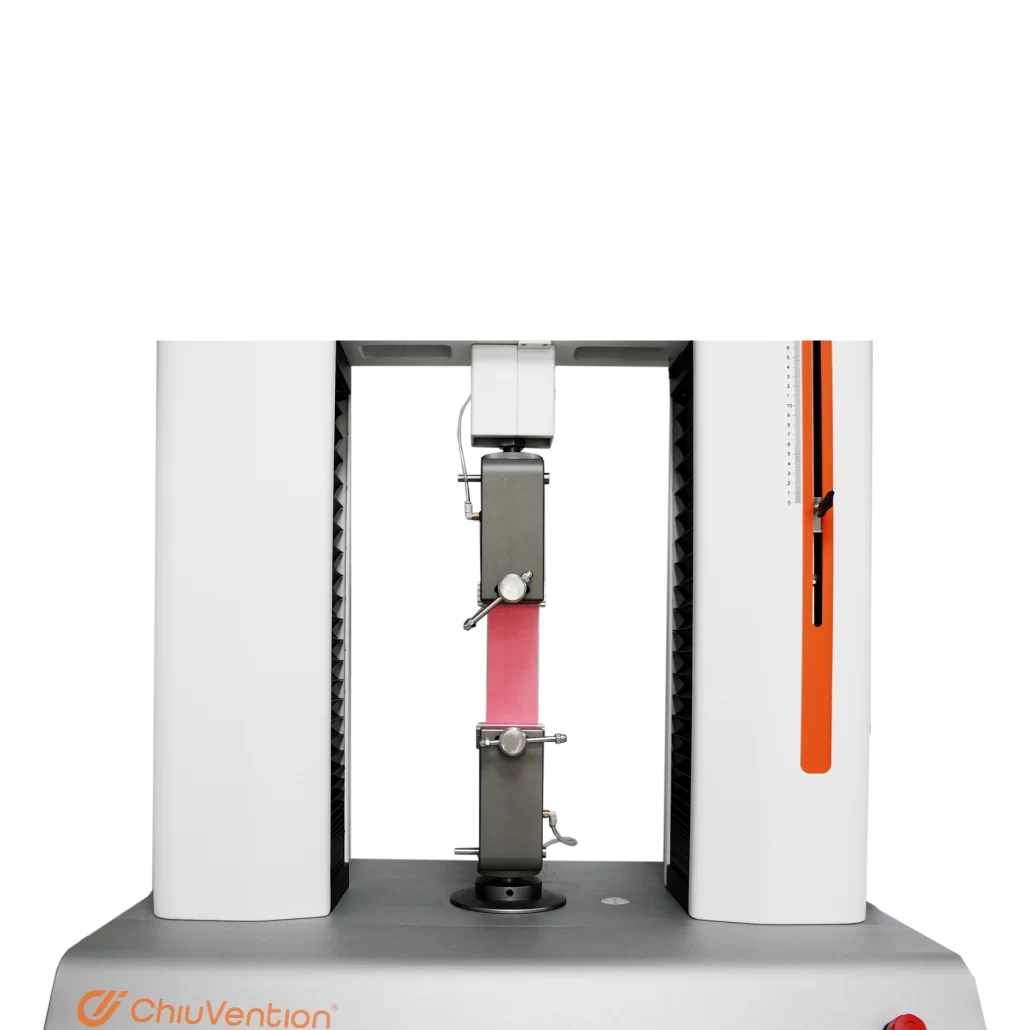
1. Hydraulic (Diaphragm) Bursting Strength Test
Standard: ASTM D3786 / ISO 13938-1
How It Works:
- The fabric is clamped over a rubber diaphragm.
- Hydraulic pressure is applied underneath the diaphragm.
- As pressure increases, the diaphragm bulges and presses against the fabric until it bursts.
- The pressure at which the fabric ruptures is recorded as the bursting strength.
Advantages:
- Simulates uniform, multidirectional stress.
- Suitable for a wide range of fabrics, especially knits and nonwovens.
2. Ball Burst Test
Standard: ASTM D3787
How It Works:
- A steel ball is pushed through a clamped fabric sample.
- The force required to rupture the fabric is measured.
- More suitable for thicker or composite fabrics where hydraulic testing may not be appropriate.
Advantages:
- Useful for rigid or coated materials.
- Simpler setup for specific industrial applications.
Bursting Strength vs. Tensile Strength
While both are measures of strength, they differ in testing direction and application:
| Property | Bursting Strength | Tensile Strength |
| Force Direction | Multidirectional (all directions) | Unidirectional (one direction) |
| Suitable For | Knits, nonwovens, technical fabrics | Woven fabrics, yarns, composites |
| Testing Method | Hydraulic or Ball Burst | Strip or Grab Test |
| Application Focus | Overall resistance to pressure | Resistance to pulling/stretching |
Factors Affecting Bursting Strength
Several factors can influence the bursting strength of a fabric:
- Fiber type: Strong synthetic fibers like polyester or nylon offer higher bursting strength than natural fibers like cotton.
- Yarn construction: Finer, tightly twisted yarns typically contribute to higher strength.
- Fabric structure: Knits have more stretch, while tighter weaves resist bursting better.
- Finishes and coatings: Treatments like resin finishing or laminating can enhance strength.
- Moisture and temperature: Environmental conditions may reduce or increase a fabric’s strength.
Applications of Bursting Strength Testing
Industries and products that rely on bursting strength data include:
- Apparel: Especially in activewear and performance clothing, where high stretch and durability are needed.
- Medical textiles: Surgical gowns, drapes, and wound dressings.
- Packaging: Woven and nonwoven sacks, bags, and containers.
- Upholstery: Furniture fabrics that endure regular stress.
- Safety products: Airbags, parachutes, and protective gear.
- Filtration media: Fabrics used in industrial and household filters.
Conclusion
The bursting strength of fabric is a key performance metric, particularly for textiles that face multidirectional stress during use. Whether you’re designing a stretchable garment, a heavy-duty sack, or a protective textile, understanding how much pressure your fabric can withstand is vital. By using standardized test methods like ASTM D3786 or ISO 13938-1, manufacturers can ensure product reliability, durability, and safety.
As textile applications continue to evolve, especially in smart textiles and technical fabrics, bursting strength will remain a cornerstone in assessing and ensuring fabric performance.
For more information on textile testing methods/standards
or textile testing machines, contact us:
What’s App: +86 180 2511 4082
Tel: +86 769 2329 4842
Fax: +86 769 2329 4860
Email: sales@tes.hk