


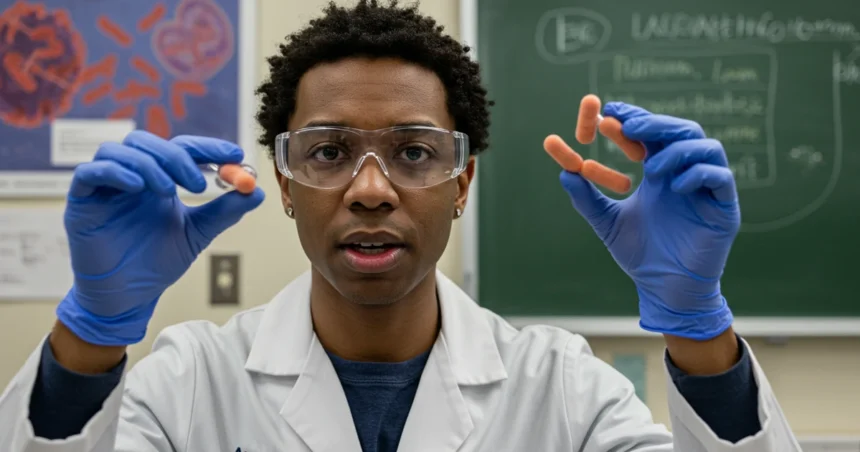
A critical question is surfacing in biology classrooms: how are viruses different from bacteria apex? Students using the Apex Learning platform for biology and other science courses are finding this a common topic. Our team is here to break down the answer, providing the clarity needed to distinguish between these two fascinating, and sometimes dangerous, microorganisms. Understanding the fundamental differences is key to grasping modern biology and medicine.
→ BBC Compacta Class 6 Solutions Module 1: Expert Verified
The core of the how are viruses different from bacteria apex question lies in their basic nature. Bacteria are living, single-celled organisms with their own cellular machinery, allowing them to eat and reproduce independently. Viruses, on the other hand, are not technically considered living. They are much smaller, simpler particles—essentially just genetic material (DNA or RNA) wrapped in a protein coat—that need to invade a living host cell to replicate.
→ Baba Farid University of Health Sciences: 2026 Schedule Released
Key Differences at a Glance
For students tackling the how are viruses different from bacteria apex query, a direct comparison is often the most effective learning tool. We’ve compiled the essential distinctions into a clear table.
| Feature | Viruses | Bacteria |
|---|---|---|
| Size | Much smaller (20-300 nanometers) | Larger (0.5-5 micrometers) |
| Structure | Genetic material (DNA or RNA) in a protein coat (capsid) | Complete cell with a cell wall, membrane, and organelles |
| Living? | No, considered non-living as they require a host to replicate | Yes, they are living, single-celled organisms |
| Reproduction | Invades a host cell and hijacks its machinery to make more viruses | Reproduces independently through binary fission |
| Treatment | Antiviral medications and vaccines for prevention | Antibiotics |
Myth vs. Fact: Common Misconceptions
When exploring how are viruses different from bacteria apex, it’s important to clear up some common myths.
Myth: Antibiotics Can Cure Any Infection
Fact: This is a dangerous misconception. Antibiotics are powerful medicines designed specifically to kill bacteria or stop them from reproducing. They have absolutely no effect on viruses. Using antibiotics unnecessarily for a viral infection like the common cold can contribute to the serious global problem of antibiotic resistance, according to the Centers for Disease Control and Prevention (CDC).
Myth: All Bacteria Are Harmful
Fact: While some bacteria cause diseases, the vast majority are harmless or even essential for life. Beneficial bacteria in our gut help us digest food, and bacteria in the environment play a crucial role in nutrient cycles like nitrogen fixation. The focus on how are viruses different from bacteria apex often stems from their roles as pathogens, but bacteria’s role is much broader.
The Question of “How are viruses different from bacteria apex?”
The frequent appearance of the query how are viruses different from bacteria apex is directly tied to digital education platforms. Apex Learning offers a wide range of science courses, including biology and chemistry, where this is a foundational concept. As students work through virtual labs and inquiry-based lessons on platforms like Apex Learning, this question is a frequent checkpoint for understanding microbiology.
This distinction is not just academic; it has profound real-world consequences. Understanding how are viruses different from bacteria apex is the first step in correctly diagnosing and treating infectious diseases. A doctor who knows an infection is bacterial will prescribe antibiotics, while a viral infection might be treated with antivirals or supportive care. This knowledge is also critical for vaccine development, which primes the immune system to fight specific viral invaders. As discussed on forums like Reddit, grasping this difference is a cornerstone of public health literacy.
Our team found that this topic is a core part of many AP Biology curricula, which often use materials that detail the lytic and lysogenic cycles of viruses and the cellular structure of bacteria. The question of how are viruses different from bacteria apex is fundamental to understanding everything from the common cold to global pandemics. So, the next time this question appears on your Apex quiz, you’ll have the answer.
Key Takeaways
- Bacteria are living, single-celled organisms, while viruses are non-living particles that require a host to replicate.
- Bacterial infections are treated with antibiotics, whereas viral infections are treated with antivirals and prevented with vaccines.
- The keyword’s trend is linked to educational platforms like Apex Learning, where this is a fundamental biology question.
Relevant posts
- Vikas Mathematics Practical Book 9th Class Answers: Your Guide
- Cockroach Janta Party’s X Account Withheld in India
- How Cockroach Janta Party Became More Popular On Instagram Than BJP
Visit bharatinformation.org for more stories.